SendTech Times
News
CAPACITY TEST:

ASML Warning Pushes Europe’s AI Sovereignty Debate Up The Stack

Article summary

ASML chief Christophe Fouquet’s criticism of EU chip-intervention thinking puts the focus on where Europe can still build leverage: trusted compute, data governance, hosting, network interfaces and niche AI supply-chain strengths.

ASML Warning Pushes Europe’s AI Sovereignty Debate Up The Stack
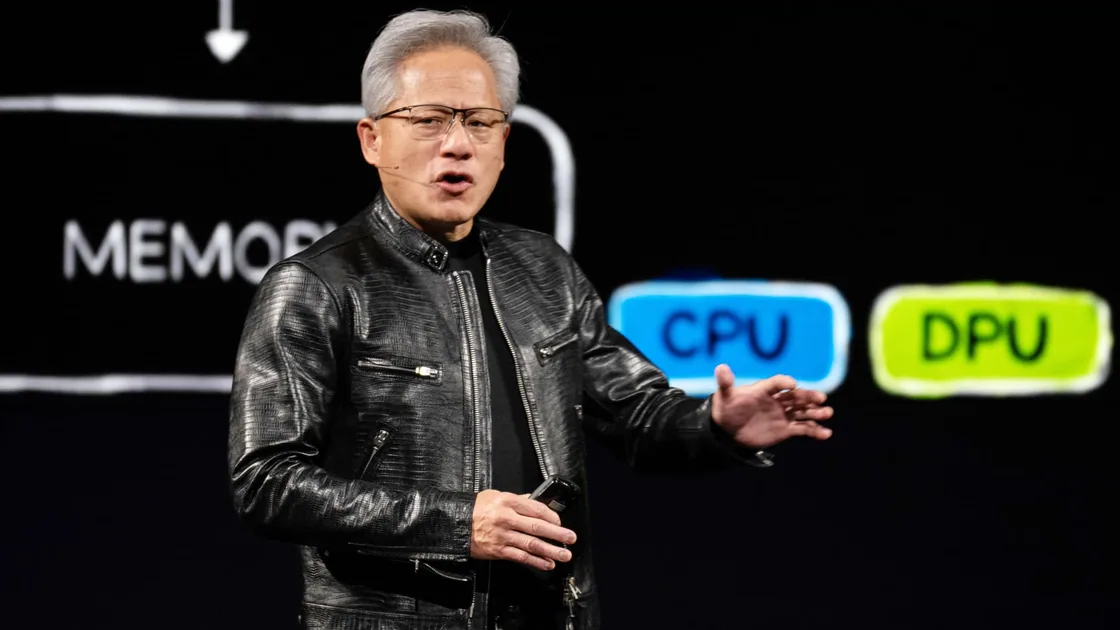
Image source: RCR Wireless News

ASML Narrows The Sovereignty Question

ASML chief Christophe Fouquet’s warning over Europe’s chip-intervention approach puts a harder question in front of policymakers: which parts of the AI supply chain can Europe realistically influence.

The argument is not that semiconductors no longer matter.

It is that the AI stack now links chips, memory, cloud infrastructure, packaging, telecom networks, power systems and capital markets in ways that no single region fully controls.

The policy target is the EU’s evolving Chips Act 2.0 framework, which is moving from subsidy-led capacity building toward supply-chain coordination in shortage conditions.

Fouquet’s concern is that directing chip flows from the top down may overstate Europe’s leverage at the base layer.

ASML is a global choke point in advanced lithography, but the EU accounts for only one percent of EUV sales, limiting how far regional political control can reach through one supplier.

That limitation matters because semiconductors sit inside many strategic systems at once.

The same supply discussion touches data centres, power grids, telecom networks and defence systems.

A rule aimed at one shortage can therefore collide with memory, packaging and cloud dependencies that are controlled elsewhere and priced through global markets.

Control Moves Toward Compute And Trust

The practical alternative is not to abandon sovereignty.

It is to move the leverage point higher.

France and the UK are described as taking a more pragmatic route around sovereign AI by focusing on compute infrastructure, data governance, trusted hosting, niche specialties and national assets.

France brings nuclear power into the discussion, while the UK points to supercomputers, chip design, GPU networking, R&D clusters and early-stage startups.

That approach fits a layered AI economy better than an attempt to command every supply input.

Critical sectors still depend on memory, cloud, packaging and other supplies controlled outside Europe.

The more workable question is where jurisdiction, access rules and trusted infrastructure can create durable influence for governments, telcos and industrial users.

Space Networks Do Not Remove Jurisdiction

The same logic applies beyond terrestrial infrastructure.

SpaceX is presented as a parallel infrastructure layer that combines rockets and satellites, fills rural coverage gaps and could eventually support niche segmented compute workloads.

But orbital systems do not erase geography.

They still rely on ground stations, spectrum authorisations, regulatory frameworks, gateways, user devices and Earthbound supply chains.

The constraints are practical as well as legal.

The source frames space infrastructure as a way around some planning and connectivity bottlenecks, not as a full cloud layer above national control.

Latency, transport, maintenance and economics remain part of the infrastructure equation, which keeps terrestrial policy and network interfaces relevant.

That makes sovereignty more distributed, not less relevant.

Control points now sit across terrestrial, subsea, airborne and orbital systems.

Europe’s next test is whether its AI policy can identify those interfaces instead of treating the whole supply chain as a hierarchy that can be commanded through chip allocation.

The concrete watchpoint is how the EU’s Chips Act 2.0 process balances shortage coordination with the higher-stack controls around compute, hosting, data and network access that France and the UK are already emphasising.

Share this article
inXf

Related articles

More
Intel Xeon 6+ Launch Puts CPU Supply on the AI Infrastructure Watchlist
Chips & Semiconductors

Intel Xeon 6+ Launch Puts CPU Supply on the AI Infrastructure Watchlist

Intel launched Xeon 6+ "Clearwater Forest" at Computex 2026 for scale-out data center workloads. The processor tops out at 288 Darkmont E-cores per socket, 576MB of L3 cache and compute tiles built on Intel 18A. The practical test is whether constrained CPU allocation becomes a larger bottleneck for agentic AI data center deployments.

Nvidia's RTX Spark Turns AI PCs Into the Next Chip Battleground
Chips & Semiconductors

Nvidia's RTX Spark Turns AI PCs Into the Next Chip Battleground

Nvidia is entering the AI PC market with RTX Spark, a MediaTek-linked SoC that combines Blackwell GPU technology with a CPU on a single chip. The move shifts Nvidia's AI strategy closer to edge devices, where agentic AI could run locally instead of relying only on cloud infrastructure. Analysts cited in the source said the PC opportunity is still small compared with Nvidia's data center and networking businesses.

Marvell Teralynx T100 Puts AI Data-Center Switching Into the Chip Race
Chips & Semiconductors

Marvell Teralynx T100 Puts AI Data-Center Switching Into the Chip Race

Marvell announced planned availability of its Teralynx T100 switch chip for AI training and inference infrastructure. The 102.4 Tbps chip is built on a 3nm process, supports up to a 512-port radix and is claimed to use 25 percent lower power than competitive solutions. The practical test is whether data-center customers use lower-power, high-radix switching to ease latency and power constraints in larger AI clusters.

AT&S Backs Malaysia AI Substrate Expansion With Customer Commitments
Chips & Semiconductors

AT&S Backs Malaysia AI Substrate Expansion With Customer Commitments

AT&S plans a customer-backed Kulim expansion for IC substrates and advanced PCBs, naming AMD as one customer as AI hardware demand moves deeper into the semiconductor supply chain.

Keep Reading

More Stories

Latest
Revolut’s UAE Licences Put Its Digital-Banking Launch Closer To MarketEconomyJun 17, 2026Revolut’s UAE Licences Put Its Digital-Banking Launch Closer To MarketRevolut has secured UAE central bank permissions for stored value and retail payment services, moving the fintech closer to a full local launch while it builds partnerships and operations.CPP Investments Puts ₹70 Billion Behind India’s AI Data-Center BuildoutCloud & Data CentersJun 17, 2026CPP Investments Puts ₹70 Billion Behind India’s AI Data-Center BuildoutCPP Investments is backing CtrlS with up to ₹70 billion, adding pension-capital weight to India’s race to build data centers for cloud and AI workloads.Plasma One Tests Whether Stablecoins Can Behave Like Everyday BankingEconomyJun 17, 2026Plasma One Tests Whether Stablecoins Can Behave Like Everyday BankingPlasma has launched Plasma One, a stablecoin banking app that combines wallet, payments, yield and underlying blockchain infrastructure into one consumer account.Arada's London Debut Tests Gulf Capital In Prime Residential DevelopmentReal EstateJun 17, 2026Arada's London Debut Tests Gulf Capital In Prime Residential DevelopmentSharjah developer Arada has unveiled 100 Avenue Road in Swiss Cottage, a 172-apartment London project that extends its UK expansion after acquiring Regal and backing Thameside West.Spotify's AI Music Push Faces A Global Consent TestAIJun 17, 2026Spotify's AI Music Push Faces A Global Consent TestSpotify has about 761 million users in 184 markets, but its next AI music tools will be judged by whether licensed covers, remixes and artist identity protections can scale across non-English growth markets.Flagright Raises $12.5 Million As AI Compliance Moves From Tools To WorkflowsFintech & Digital PaymentsJun 17, 2026Flagright Raises $12.5 Million As AI Compliance Moves From Tools To WorkflowsFlagright raised a $12.5 million Series A led by Infinity Ventures to expand explainable AI workflows for financial crime compliance, with banks, fintechs and credit unions as the stated market focus.Intel 18A-P Enters Risk Production, But Foundry Proof Still Runs Through YieldChips & SemiconductorsJun 17, 2026Intel 18A-P Enters Risk Production, But Foundry Proof Still Runs Through YieldIntel has started risk production of its 18A-P node, adding performance and power claims to its foundry pitch while outside-customer commitments, Arm manufacturing proof and packaging capacity remain the next tests.AWS WAF Turns AI Bot Access Into A Paid Edge ControlAIJun 17, 2026AWS WAF Turns AI Bot Access Into A Paid Edge ControlAWS WAF added AI traffic monetization for CloudFront-protected content, letting publishers set per-request prices for verified and unverified AI agents while routing x402 stablecoin payments through third-party facilitators.UAE Creates AI And Data Authority To Put Agentic AI Inside GovernmentPoliticsJun 17, 2026UAE Creates AI And Data Authority To Put Agentic AI Inside GovernmentThe UAE has approved a new Artificial Intelligence and Data Authority that will combine public data, AI and digital-government functions under one Cabinet-linked body. Omar Sultan Al Olama will chair the authority, which takes over mandates previously spread across the AI office, the TDRA digital government sector and the UAE Data Office. The move makes federal data quality, AI platforms and digital service design part of one operating structure as the government pushes agentic AI into public administration.Listen Labs Raises $69 Million To Scale AI Customer InterviewsAIJun 17, 2026Listen Labs Raises $69 Million To Scale AI Customer InterviewsListen Labs raised $69 million after running over one million AI-powered interviews, testing whether AI moderation can make customer research faster without losing participant quality.Qwen Goes Physical: Can Alibaba’s Robot Models Navigate Real Homes?AIJun 17, 2026Qwen Goes Physical: Can Alibaba’s Robot Models Navigate Real Homes?Alibaba released Qwen-Robot, an embodied AI model family covering navigation, manipulation and world modeling for physical agents. The suite includes Qwen-RobotNav, Qwen-RobotManip and Qwen-RobotWorld, with Qwen-RobotNav shown on a Unitree Go2 robot using a single low-resolution camera. The launch gives Alibaba a concrete robotics layer around Qwen, but the evidence in the source is still a technical demonstration rather than broad commercial deployment.Public First Poll Shows China AI Leads In Perception But Trails On TrustAIJun 17, 2026Public First Poll Shows China AI Leads In Perception But Trails On TrustA Public First poll covering over 18,000 people across 15 countries found respondents in 11 nations viewed China as ahead in AI capability and innovation. The same survey showed a trust gap: US AI models ranked second on net trust at +16, while China placed 10th at -8. The findings land as China pushes its AI Plus strategy and Chinese models such as Alibaba Qwen3.7-Max and Zhipu GLM-5.1 appear in top Code Arena rankings.