Public First Poll Shows China AI Leads In Perception But Trails On Trust
A Public First poll covering over 18,000 people across 15 countries found respondents in 11 nations viewed China as ahead in AI capability and innovation. The same survey showed a trust gap: US AI models ranked second on net trust at +16, while China placed 10th at -8. The findings land as China pushes its AI Plus strategy and Chinese models such as Alibaba Qwen3.7-Max and Zhipu GLM-5.1 appear in top Code Arena rankings.
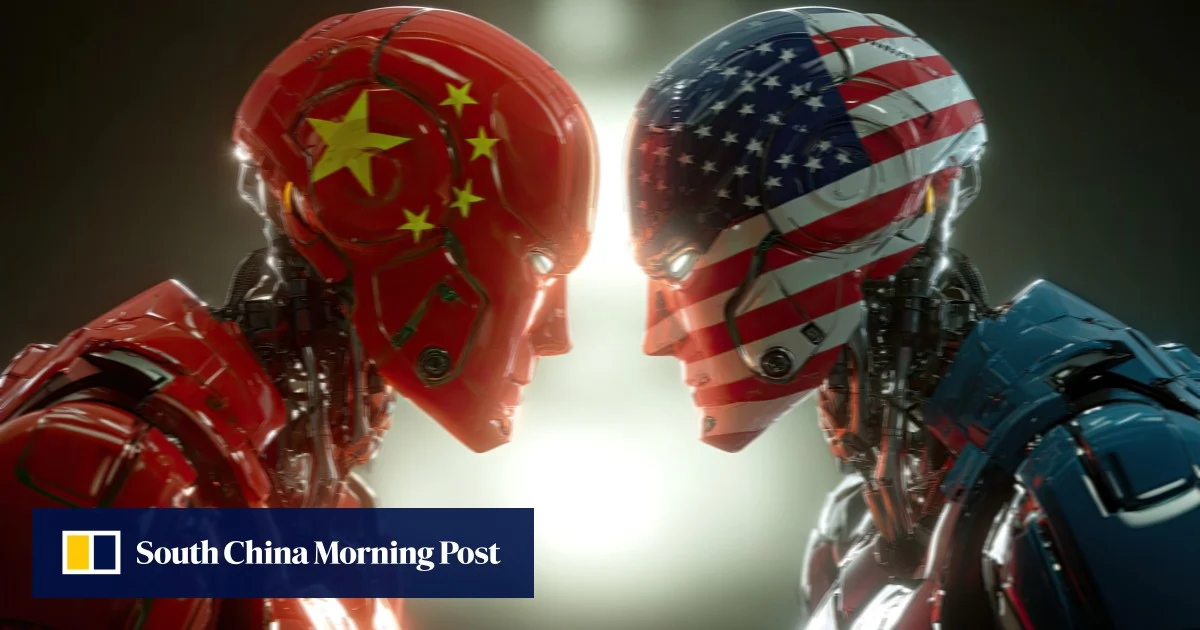
A Public First poll has created a split-screen picture of the global AI race: China is increasingly seen as a capability leader, but its models still face a trust deficit.
Capability Perception Moves Toward China
The survey covered over 18,000 people across 15 countries and found that respondents in 11 nations viewed China as ahead in AI capability and innovation.
Canada, Britain and France were among the markets where at least 40 per cent of those polled saw China outpacing the US.
Germany was the least convinced by US leadership, with only 23 per cent of respondents saying the US was ahead.
In the US sample, 24 per cent said China was ahead, while 51 per cent said the US remained in front.
That pattern matters because AI leadership is not being judged only by model releases or benchmark tables.
Public perception is becoming part of the competition, especially in countries that are normally treated as close US technology partners.
Trust Remains The Constraint
The same poll showed a different result when respondents were asked about trust.
US AI models ranked second on the survey's net trust measure at +16, behind Japan at +22.
China ranked 10th with a negative net trust score of -8.
That gap limits what the perception shift proves.
The poll suggests many users see China as moving fast in AI capability, but it does not show equivalent confidence in Chinese models as systems that users, companies or institutions would trust.
Public First also found AI was seen as the most impactful technology today.
In the survey, 46 per cent of respondents said AI had already transformed the world, while 45 per cent said it would do so in the future.
The same results included broad support in nearly every country for a pause on AI development, according to the company statement material.
Benchmarks Add A Technical Backdrop
The perception data arrives as China continues to promote its AI Plus strategy across manufacturing, agriculture and services.
Chinese companies are also releasing models that compete with US rivals on global benchmarks.
On Code Arena's front-end web development leaderboard, Alibaba Group Holding's Qwen3.7-Max took eighth place and Zhipu AI's GLM-5.1 took ninth.
No other model outside Anthropic appeared in that top 10 group.
Zhipu also launched GLM-5.2 on Monday as a cheaper alternative to Western models, with pricing described as roughly a 10th of Anthropic's premium Claude Code and Claude Max tiers.
The Watchpoint Is Adoption, Not Only Ranking
The next test is whether perception and benchmark visibility translate into adoption outside China.
The poll gives China a stronger reputation for AI capability in many countries, while the trust figures show why reputation alone is not enough.
For Chinese model developers, the key checkpoint is whether Qwen, GLM and other systems can convert capability claims into trusted use in enterprise, government or developer workflows.
The Public First numbers show momentum in perceived leadership, but the -8 trust score shows the barrier that still has to be addressed.